


Solvency Reporting Made Simple
Automate data collection, validation and XBRL reporting for Solvency II.
UBPartner helps insurers and pension funds automate Solvency II and IORP reporting — from data collection and validation to compliant XBRL submission.
Whether reporting is managed internally or through an advisor, UBPartner provides the tools to manage evolving EIOPA and local regulatory requirements efficiently.
The Solvency Reporting Challenge
Solvency II reporting is becoming increasingly complex as regulatory requirements, taxonomies, templates and validation rules evolve.
With the next major reporting changes applying from 2027, insurers need to prepare their data, processes and reporting systems in advance.
Reporting teams need to:
- Manage changing EIOPA taxonomies and templates
- Maintain data quality across reporting processes
- Validate reports before submission
- Reduce manual Excel-based work
- Adapt quickly to regulatory changes

Solvency II is evolving. Are you ready for 2027?
EIOPA published the revised Guidelines on reporting and disclosure in July 2026, with the revised requirements applying from 30 January 2027.
The new Solvency II taxonomy 2.10.0 was published in July 2026 and is applicable from the Q1 2027 reporting reference period.
What should insurers do now?
- Assess the impact of the new reporting requirements
- Identify affected templates and data points
- Review existing data mappings
- Test validation rules
- Prepare reporting teams and systems for the transition
OUR Solvency Reporting APPROACH
UBPartner’s solution is built to fit your workflow — whether you work in Excel, CSV, or a custom integration. It streamlines the process from data preparation to submission, reducing errors and accelerating review cycles.
How it works:
1. Collect data using pre-mapped templates in Excel or CSV.
2. Validate automatically against the latest EIOPA validation rules and filing requirements
3. Generate compliant XBRL reports ready for submission.
4. Review errors instantly through detailed validation reports.
No XBRL expertise required — our templates and tools guide users step by step.
Flexible deployment
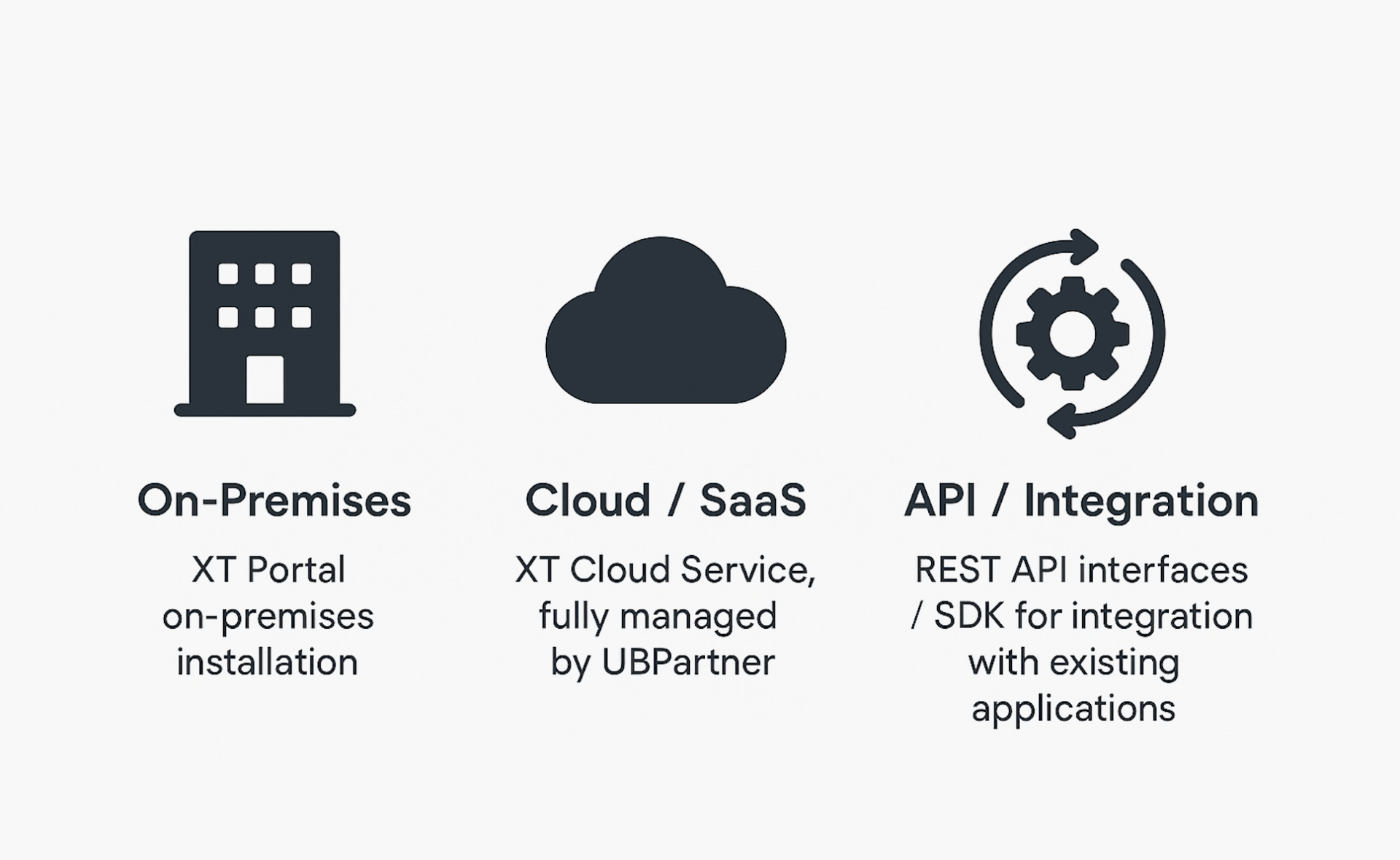
Choose the deployment model that best fits your environment:
● On-premise Portal or Excel Add-in for full control and local installation.
● XT Cloud Service — fully managed and always up-to-date.
● Integration SDK — connect UBPartner validation and generation modules directly to your internal systems via REST API or Java SDK.
Beyond compliance
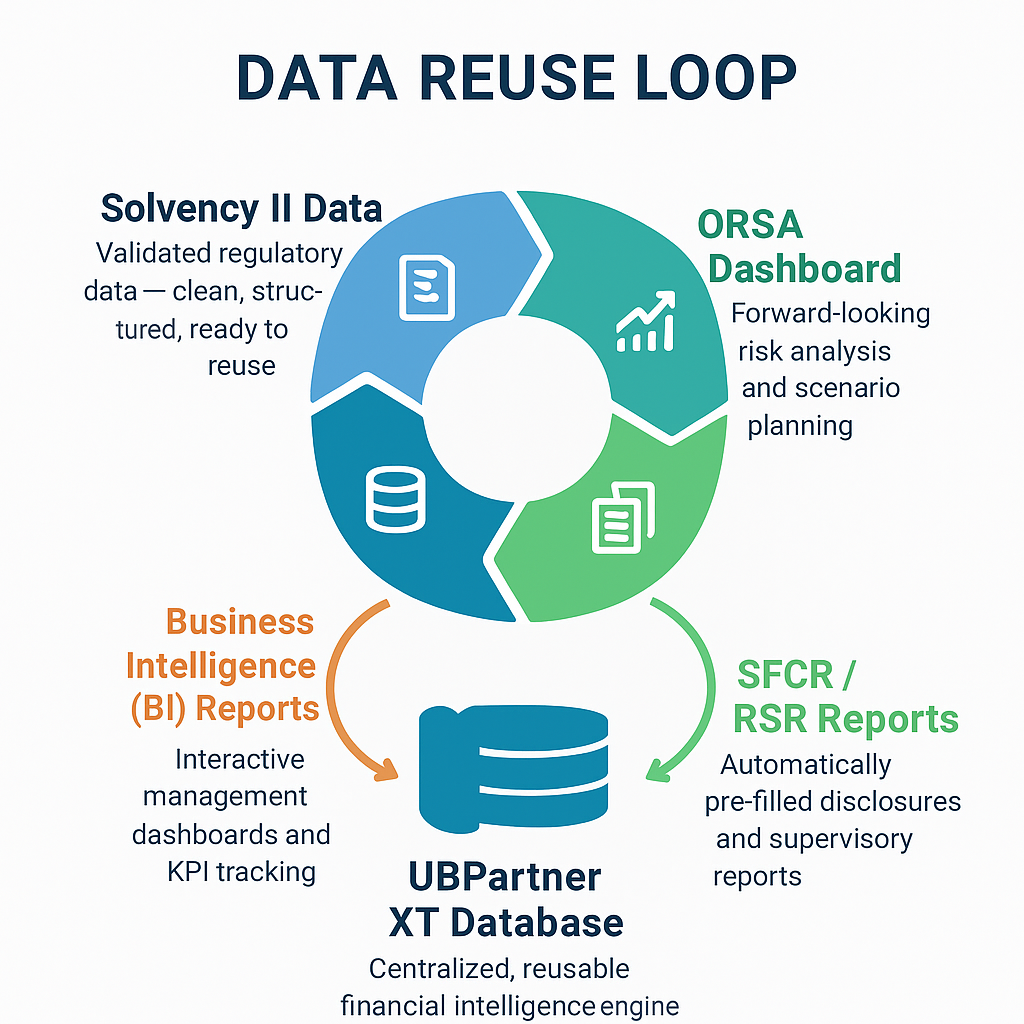
Your Solvency II data can power more than regulatory filings.
UBPartner’s solution enables you to reuse reporting data for:
● ORSA dashboards,
● SFCR and RSR reports, and
● internal risk analysis and scenario simulations.
By centralizing your Solvency data in the XT Database, you eliminate manual copying and reduce the risk of inconsistencies — saving time and improving data quality.
Partnering with industry experts
UBPartner works with leading actuarial and consulting firms — including Milliman, Mazars, Actuelia, Actelior, and Valucor — who rely on our certified Solvency II and IORP Toolkit to deliver compliant and efficient reporting services.

Let’s discuss your Solvency project
More than 1000 insurance companies and financial institutions across Europe trust UBPartner for their Solvency II reporting.
Contact us today to learn how our XBRL Toolkit can simplify your reporting and ensure 100% compliance.
Solvency II ITS amendment (Effective January 2027)
EIOPA’s revised Implementing Technical Standards (ITS) aim to simplify Solvency II reporting, reduce the reporting burden and increase the use of proportionality principles.
Key changes include:
- Reduced reporting burden through lower reporting frequency and the deletion of certain templates.
- Greater proportionality, particularly for small and non-complex undertakings.
- Technical simplifications to reporting requirements.
- New taxonomy for 2027: EIOPA’s Solvency II taxonomy 2.10.0 was published in July 2026 and will apply from the Q1 2027 reporting reference period.
Prepare your reporting environment now.
Continuous compliance & dual Support
UBPartner continuously delivers updates aligned with every official EIOPA taxonomy release.
Clients benefit from dual-taxonomy validation, backward compatibility for legacy submissions, and automated migration tools throughout the transition period.
National extensions & local taxonomies
Alongside EIOPA standards, UBPartner supports national extensions such as LCB-FT, ORPS_NAT, RAN, and Solvabilité 1, ensuring consistent compliance across France and other EEA jurisdictions.
Early access & sandbox testing
UBPartner provides a sandbox environment for insurers to test and validate new templates ahead of the 2027 reporting transition.

Solvency II Reporting FAQ
When do the revised Solvency II reporting requirements apply?
The revised Solvency II reporting and disclosure requirements apply from 30 January 2027. For supervisory reporting, the new Solvency II taxonomy 2.10.0 applies from the Q1 2027 reporting reference period.
Which taxonomy applies from Q1 2027?
Solvency II taxonomy 2.10.0 applies from the Q1 2027 reporting reference period. It was published by EIOPA on 3 July 2026.
What should insurers prepare before 2027?
Insurers should review the impact of the new requirements, assess affected reporting templates and data mappings, update their reporting processes, and test data validation and XBRL generation before the first 2027 reporting cycle.
Can UBPartner support taxonomy migration?
Yes. UBPartner’s Solvency II Toolkit is designed to support the transition to updated EIOPA taxonomies, including taxonomy migration and validation workflows.
Can I test the new templates before implementation?
Yes. UBPartner provides a sandbox environment where insurers can test and validate the new templates before implementation.
Does UBPartner support national extensions?
Yes. UBPartner supports EIOPA reporting as well as relevant national extensions and local regulatory reporting requirements, helping insurers manage different reporting requirements within a consistent reporting environment.

Prepare for Solvency II 2027
Want to test your readiness for the 2027 reporting transition?
→ Book a Solvency II demo
READ MORE ABOUT HOW TO DELIVER ORSA DASHBOARDS QUICKLY AND EASILY
Valucor is an Actuarial consulting firm that has adopted the XT Cloud Service and the XT Database for its clients, improving its scope and extending its service opportunities.
Read more